
Mikado Armchair
Edward Barber & Jay Osgerby, 2024
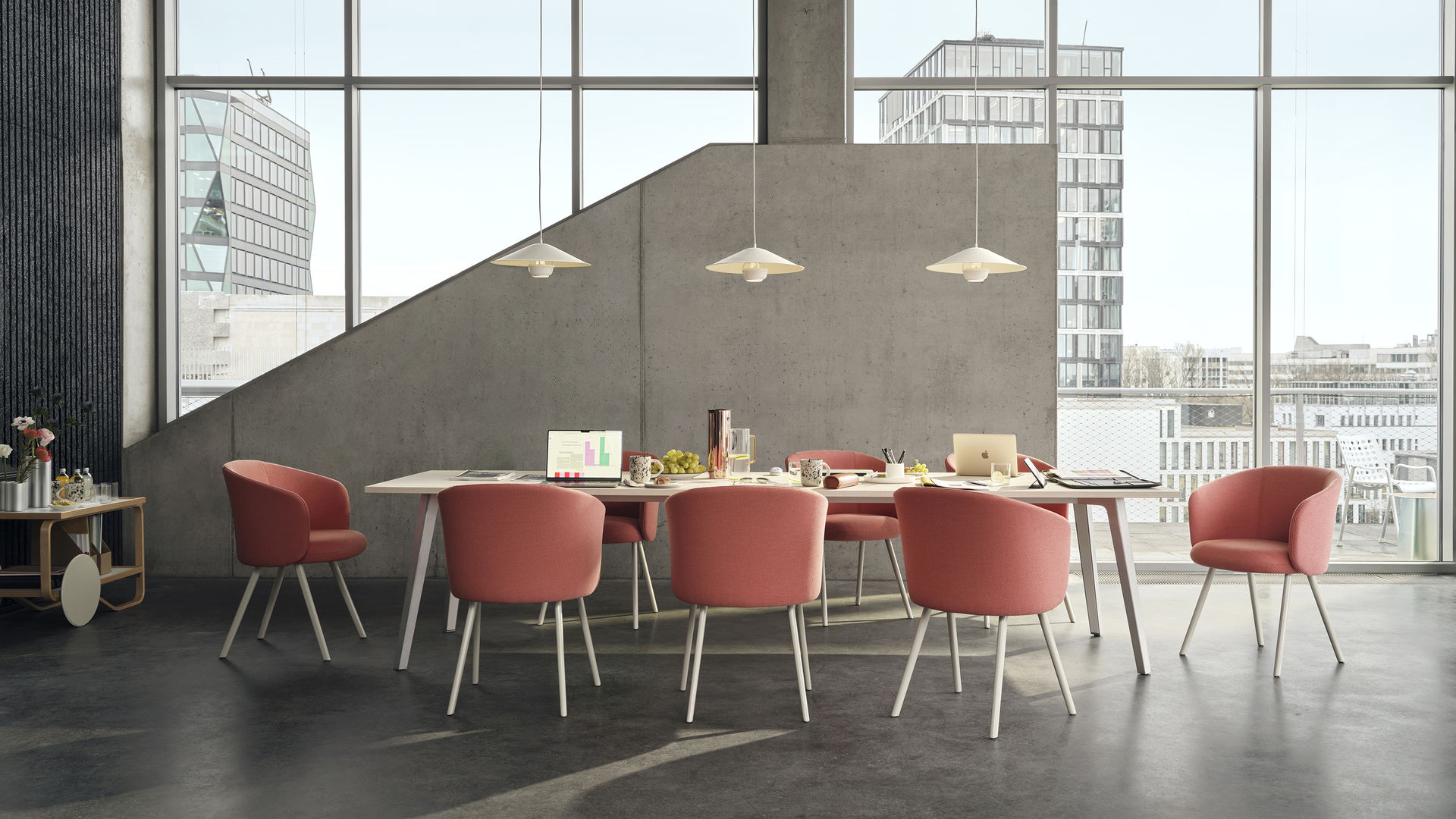
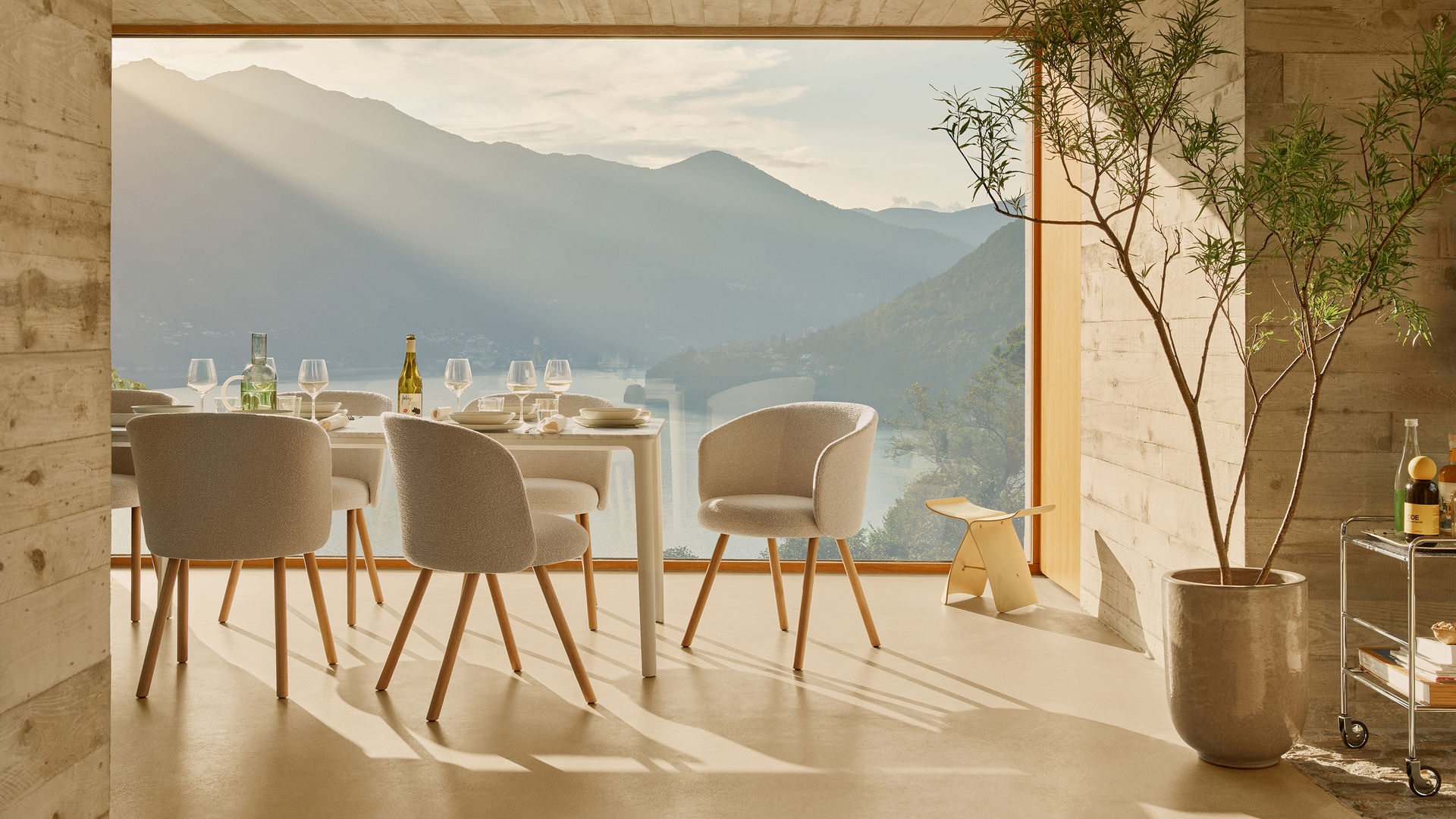
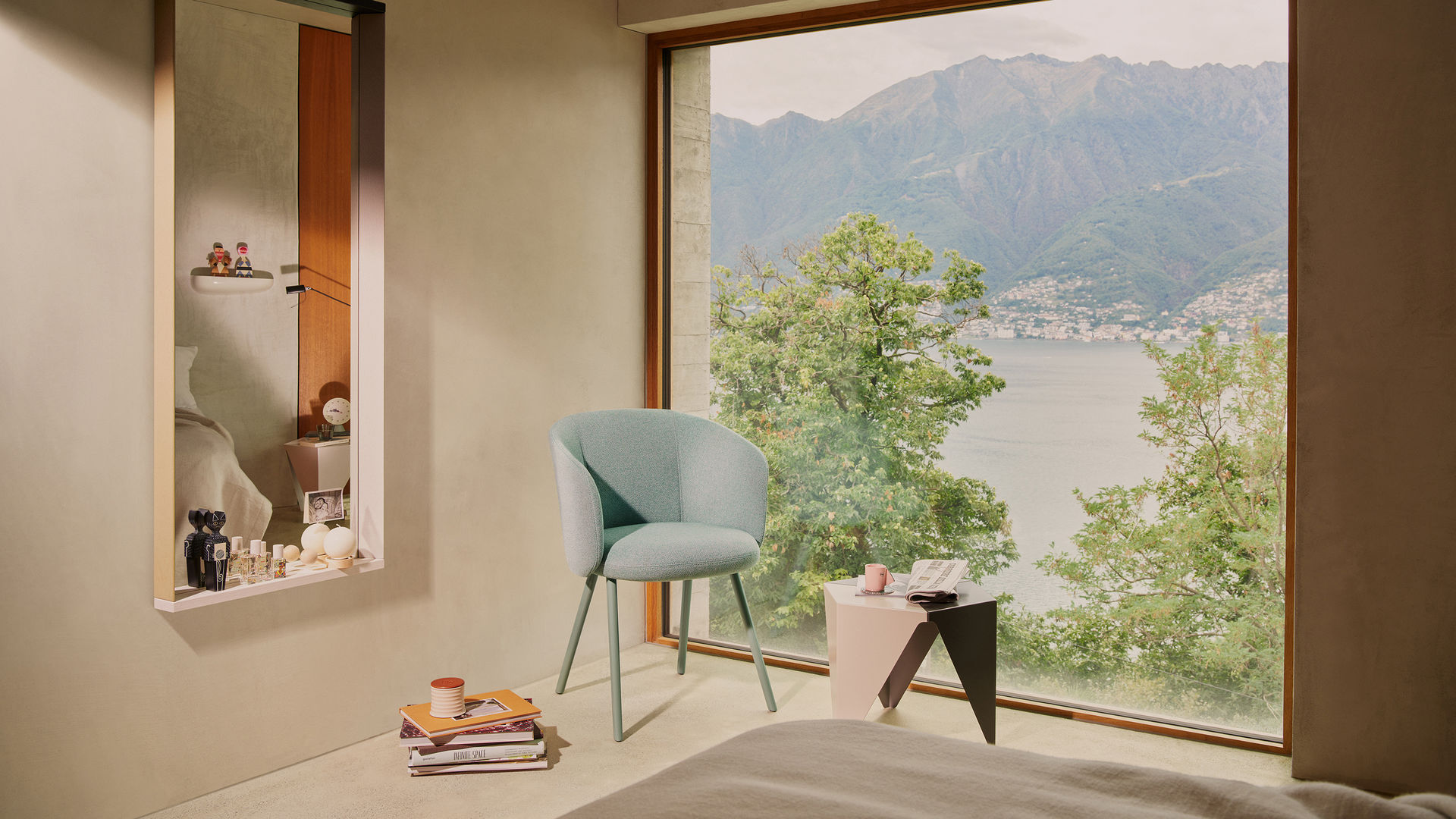
Mikado not only aims to impress by its serene yet commanding silhouette but also through its unparalleled comfort. The Mikado seating experience is defined by upholstery on all sides together with a dynamic movement of the backrest. A mechanism concealed beneath the seat allows the back to move with the sitter and comfortably recline at a slight angle.
Mikado is available as an armchair or as a side chair. In the armchair version, the sides of the rounded backrest extend forward to simultaneously serve as armrests.
The covers of the Mikado chair are not glued and can be removed for cleaning or replacement. The legs may be replaced individually or exchanged for a different material option – wood or recycled aluminium. The inner seat panel is made of recycled aluminium while the core of the backrest shell is produced from recycled post-consumer polypropylene, which can be easily separated from the foam padding during recycling. The concept of a simple exchange of components gives Mikado long-term versatility, thereby ensuring longevity.



Information


Mikado


Mikado is a chair with a quiet yet confident presence that aims to impress not just with its form, but also through its comfort. It is available in lounge chair, chair and bar stool versions, in each case as either an armchair with suggested armrests or as a side chair. It is equally suited to dining tables, kitchen counters or home workspaces as to offices, restaurants or hotel bars and lobbies. The Mikado seating experience is defined by upholstery on all sides as well as the movement of the backrest. An ingeniously simple mechanism concealed beneath the seat allows the back to gently recline at a slight angle. Mikado was designed with sustainability in mind from the outset: the covers are not glued and can be removed for cleaning or replacement. The legs of the four-legged base may be replaced individually or exchanged for a different material option – wood or recycled aluminium. The four-star base and height-adjustable five-star base on castors are also made from recycled aluminium. The different bases can be exchanged for any of the other variants. The inner seat panel is made of aluminium with a high recycled content, and the backrest shell is produced from recycled post-consumer polypropylene. During recycling, the latter can easily be separated from the V-Foam polyurethane foam padding, which is also recyclable. The simple interchangeability of components gives Mikado long-term versatility, thereby ensuring lasting use. The various Mikado models – Mikado, Mikado Low and Mikado High – and their seat shells in armchair or side chair versions each offer a distinctive seating experience, yet are designed with such aesthetic coherence that they can be mixed and matched around a table or within a given space without disturbing the visual harmony. Different bases, two backrests, a choice of fabric or leather covers and numerous colours afford a wide variety of possible configurations.


